A Messy Help Desk Is a Trust Problem Wearing a Ticketing System
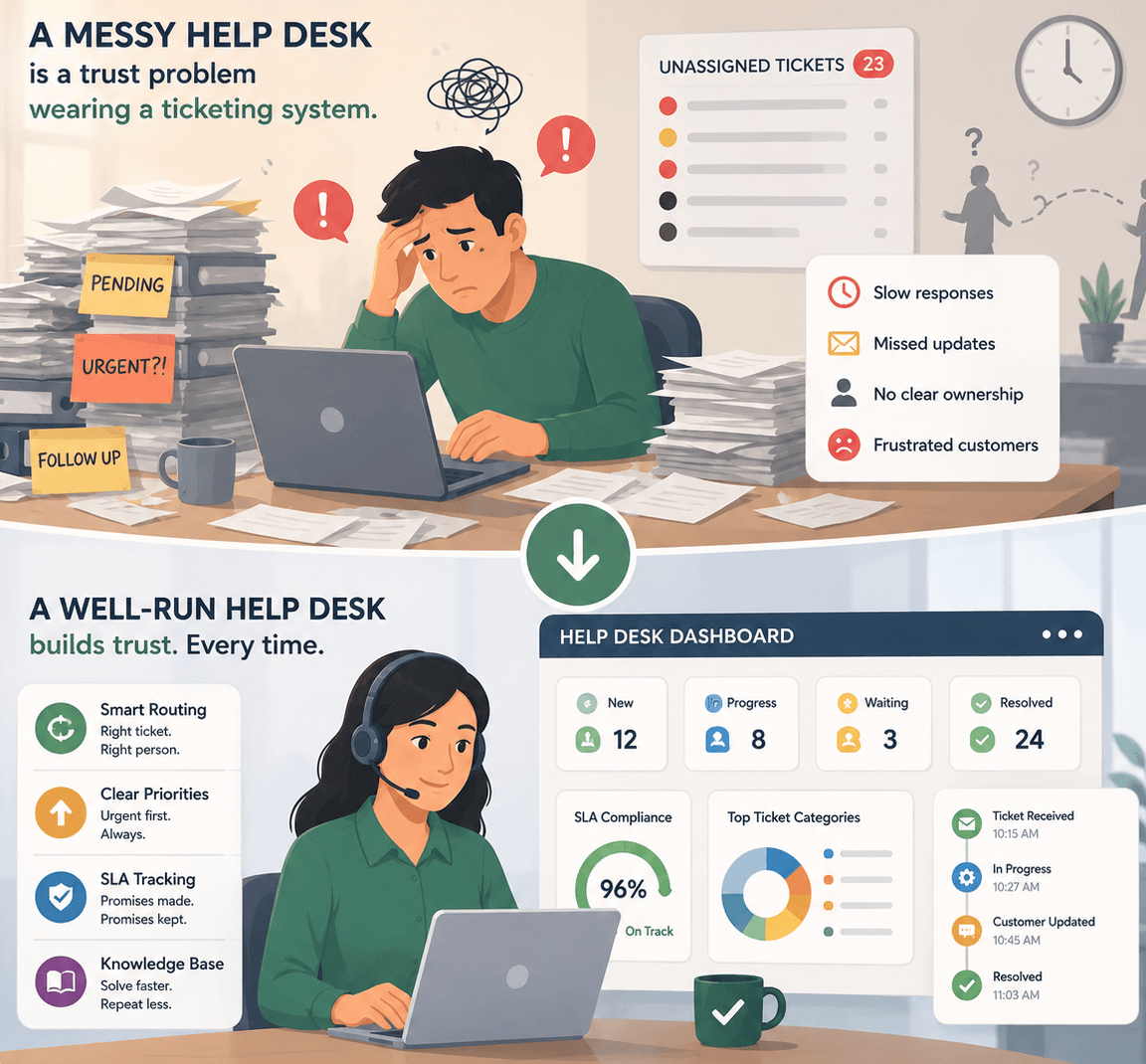
A Messy Help Desk Is a Trust Problem Wearing a Ticketing System
Every business with a growing customer base eventually hits the same wall: tickets pile up faster than they get resolved, priorities blur, and nobody's entirely sure what's actually urgent anymore. The tools aren't usually the problem. The system around them is.
Why "more agents" isn't always the fix
Throwing headcount at a disorganized help desk just means more people working inside the same broken process. Without clear routing, prioritization, and escalation paths, additional agents create more noise, not more resolution.
What a well-run help desk actually requires
- Smart ticket routing, so issues land with the person best equipped to solve them — not whoever's free
- Clear prioritization rules, so urgent issues never sit behind low-stakes ones
- SLA tracking that's actually enforced, not just defined in a document nobody checks
- Knowledge base discipline, so common issues get resolved faster every time they recur, instead of being solved from scratch repeatedly
The hidden cost of ticket chaos
A disorganized help desk doesn't just slow down resolution times — it erodes trust. Customers who have to repeat themselves, wait without updates, or get bounced between agents start to wonder if anyone's actually in control. That doubt is hard to undo.
Organization is a competitive advantage
In categories where products are increasingly similar, the experience of getting help becomes a real differentiator. A help desk that runs cleanly — fast routing, clear ownership, visible progress — quietly tells customers they made the right choice.
Growth can be a great problem to have
As long as you have the right team.